
Simply put, structural components are parts that form the main body and bear loads in machinery and construction projects, serving as support and load-bearing members. Examples include machine bases, motorcycle crash bars, and various brackets. They are mainly made of steel, aluminum alloy, titanium alloy and other materials, and fabricated through processes such as welding, cutting and bending.
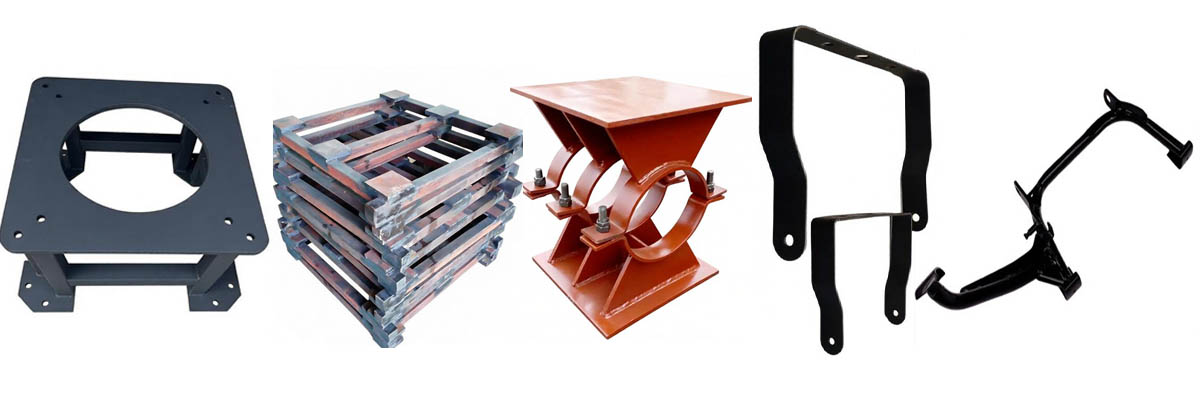
Features of Structural Components
To adapt to various complex and harsh working conditions, structural components generally feature high precision, high strength, high durability and reliability.
High strength: Metallic materials have outstanding strength and can withstand large tensile, compressive and bending forces. Therefore, metal structures are not easy to deform or fracture under heavy loads, ensuring structural stability and safety.
Good ductility: Metals can undergo plastic deformation under external force without easily breaking. Such ductility facilitates material forming and is suitable for manufacturing structural components with complex shapes.
Corrosion resistance: With appropriate surface treatment processes, workpieces can achieve good corrosion resistance and maintain stable performance for a long time in harsh environments. This is especially critical for structural components used outdoors, such as bridges and building facades.
Application Fields
Machinery equipment: Bases and brackets for machinery equipment
Transportation: Brackets and crash bars for motorcycles, mountain bikes and other special vehicles
Lighting: Sheet metal brackets for lamps
Engineering: Welded brackets for bridges and buildings
Shipbuilding: Marine structural components
Other industries
Quality Control
Material control: Verify that materials comply with drawing requirements, and confirm their mechanical properties and chemical composition meet the specifications.
Drafting and lofting: Build 3D models based on customers’ 2D drawings and review customers’ supplied 3D drawings to guarantee dimensional and geometric accuracy. Confirm processing procedures and tooling simultaneously to ensure finished product precision.
Cutting and machining: Select proper cutting methods and equipment to ensure flatness and precision of cutting surfaces. Control machining allowance during processing to guarantee dimensional accuracy and shape conformity of components.
Assembly and welding: Assemble in accordance with design requirements to ensure accurate position, angle and dimension of components. Welding is a critical step in steel structure fabrication. Welding parameters, sequence and quality shall be controlled to avoid welding defects and residual stress.
Connection and fixing: Bolted connections, riveting and other connection methods shall follow design requirements to guarantee the dimension, precision and strength of fasteners. Adopt proper fixing methods and tools to secure the stability and safety of structural components.
Supporting Accessories
We provide one-stop sourcing of standard parts, small tools, rubber sealing rings, metal nameplates and other accessories. Feel free to contact us if you have inquiries about supporting accessories.
Cooperation Modes
Drawing-based production: Manufacture according to customers’ design drawings.
Sample-based production: We provide reverse engineering service. We scan customers’ samples to create models before production.
Requirement-based production: You provide your technical requirements, and we develop drawings and produce the structural components.